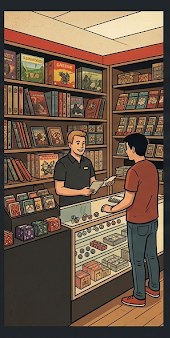
FLGS stands for Friendly Local Game Shop. It's tabletop gaming's term for the independent specialty retailer — the game store in your city that sells board games, trading card games, roleplaying game sourcebooks, miniatures, dice, and accessories, and that runs community events in the space behind the cash register. The "friendly" part of the acronym is not marketing language; it's a description of what good game shops actually are: welcoming community spaces for people who care about games.
What a FLGS Does That Amazon and Target Cannot
Amazon sells games cheaper, usually. Target has Catan and Ticket to Ride and the six board games that get featured in gift guides every December. Big box electronics stores carry video games and occasionally board game bestsellers. None of these are the FLGS, and the difference matters.
The core function of a good FLGS is community infrastructure. The store runs weekly events — Magic: The Gathering Friday Night Magic, Pokémon League, D&D Adventurers League nights, Pathfinder Society organized play, board game open nights, miniature painting workshops. These events are often free or low cost. They're how you find other people who play the same things you do. They're where you go when you don't have a gaming group and need to find one. They're where you take a friend who's curious about tabletop gaming and want them to have a good experience with it.
A good FLGS also has staff who know their inventory and can recommend games based on what you've already played and what you're looking for. This is genuinely valuable in a hobby where the range of products is enormous and the difference between a game you'll love and a game you'll hate can be subtle. The staff at a strong game shop have played most of what they sell and can tell you which dungeon master's guide is the right entry point for your group, which painting kit actually includes what beginners need, which trading card game has the friendliest local community.
And game shops provide physical space for gaming — tables, chairs, terrain, lighting. Open gaming space where you can bring your own games, or borrow from the shop's library, and play for hours without buying anything. This is economically irrational behavior by conventional retail standards, and it's why game shops matter: they subsidize community with their retail margins because they understand that the community is the product.
The Economic Reality of Running a Game Shop
FLGS margins are thin. Board games typically retail at 40–50% above wholesale, which sounds reasonable until you factor in rent, staffing, event supplies, insurance, and the carrying costs of inventory. Online retailers operate at lower overhead and can sell at smaller margins. This puts the FLGS in permanent structural competition with retailers who can always undercut them on price.
Game shops survive this competition by providing something online retailers cannot: the physical community space, the expert staff, and the events calendar. The stores that thrive are the ones that have made community events a core part of their business model rather than a side activity. The stores that close are usually the ones that tried to compete primarily on inventory and price rather than experience.
Buying from your local game shop rather than online — even when the online price is lower — is a direct investment in that community infrastructure. The store you buy from today is the store that runs the open gaming night next Friday and the Magic tournament next Saturday and the D&D introductory session for beginners next month. If it closes, those things stop happening.
What Makes a Good FLGS
Not all game shops are FLGS in the meaningful sense. A store that sells games but has no gaming space, no events, and staff who can't tell you the difference between a worker placement game and a deck builder is a game retailer, not a game shop. The distinction matters when you're trying to find community.
The markers of a genuinely good FLGS: a dedicated gaming space with tables and chairs available for use; a regular events calendar that's actually followed; staff who play games themselves and can make specific recommendations; a game library (even a small one) available for in-store play; and a general atmosphere of welcome toward people who are new to the hobby. Good shops are explicit about their inclusiveness — they want new players, they want beginners, they want people who don't know what they're doing yet. The best shops in the Midwest have built communities that absorb newcomers and make them feel like regulars within a few visits.
How to Find Your FLGS in the Midwest
The game shop guides on this site cover specific cities across the Midwest with real shop recommendations and what each one specializes in. For cities not yet covered: BoardGameGeek maintains a community-sourced list of game shops by region that's worth consulting. Google Maps searches for "game shop" or "board game store" supplemented by reading reviews for specific mentions of community events and gaming space will help you filter real FLGSes from pure retail operations.
When you visit a new shop: ask if they have open gaming nights. Ask what organized play events they run. Ask what their most popular games to demo are. The answers will tell you quickly whether this is a community-building shop or just a store.
Frequently Asked Questions
Are game shops dying because of Amazon?
Some are. The ones that built their identity around price competition with online retailers are at a structural disadvantage that's hard to overcome. The ones that built their identity around community events, gaming space, and customer relationships are doing considerably better. The FLGS that has a packed Friday Night Magic event and a full calendar of organized play and a board game library available for in-store use is not competing with Amazon — it's doing something Amazon fundamentally cannot do.
What's the etiquette for using a game shop's gaming space?
The general expectation is that you make a purchase if you use the gaming space for an extended period — a drink, a small accessory, or something from the game library. This isn't always an enforced rule, but it's the right thing to do. If you're playing a game you brought from home on their tables for four hours, buy something. If you're playing a game from their library, a small purchase is customary. Ask staff if you're unsure — good shops will tell you explicitly what the expectation is.
How do I find out about a game shop's event calendar?
Most game shops post events on their website, on Facebook, and increasingly on Discord. The Wizards of the Coast store locator (for Magic and D&D organized play) and the Paizo event finder (for Pathfinder Society) list official organized play locations and their event schedules. Calling or visiting the shop directly remains the most reliable way to get a complete picture of what events they run.
I'm new to tabletop gaming. Is a game shop the right place to start?
Yes. A good FLGS is specifically designed to be an entry point into the hobby. Staff who run introductory sessions, demo games available to try, and experienced players willing to teach newcomers are all things good shops actively maintain. Walk in, tell them you're new and interested in getting started, and let the shop show you what it can do. The beginner guides on this site can supplement what you learn at the shop.
This guide reflects the general landscape of game retail and community spaces. Individual shop experiences vary. The shop guides on this site reflect specific research into Midwest locations.