Warhammer 40,000 is the game that everyone warns you about. The warning is accurate: it is expensive, time-consuming, and occasionally maddening. It is also genuinely great, with a community of players and hobbyists that is unusually supportive of newcomers and a hobby depth that can occupy you for years without running dry. The goal of this guide is to get you into the hobby without the mistakes that cost most new players $200 they didn't need to spend in the first month.
What Warhammer 40K Actually Is
Warhammer 40,000 is a miniature wargame set in a science fiction universe so dense and elaborate that its lore fills dozens of novels, video games, animated series, and tabletop games. The core experience: you build and paint an army of plastic miniature soldiers, tanks, and monsters, then use them to fight battles against an opponent's army on a table using rulers, dice, and a rulebook. The strategy layer is real — army composition, tactical positioning, and understanding your opponent's faction all matter. The hobby layer is equally deep: assembly and painting can be as casual or as obsessive as you want it to be.
Games Workshop, the UK company that makes Warhammer, has been producing 40K since 1987. The current edition (10th Edition) substantially streamlined the rules compared to previous editions, making it more accessible to new players than it's been in years. This matters because "complicated rules" used to be a significant barrier; it's less of one now.
The Cost Reality
Here's the honest number: getting a functional starter army that can play real games will cost you $150–300 depending on your faction choice and how you shop. A fully complete, painted army that's competitive for tournament play can run $500–1,500 or more. The hobby has a reputation for expense because both of these things are true simultaneously.
The number one way to overspend as a new 40K player is to buy too much before you know what you want. The enthusiasm of entering the hobby combines with the overwhelming range of available kits to produce carts full of miniatures that sit unpainted in boxes — what the community calls "the pile of shame." The prevention is simple: start with a small project, finish it, then buy more.
The Starter Approach
Start with one Combat Patrol box (~$120 at MSRP, often 10–15% less at a FLGS). This gives you enough models for introductory games and a painting project that's manageable rather than overwhelming. Do not buy anything else until you've assembled and at least basecoated these models.
Choosing a Faction
Warhammer 40K has roughly 20 playable factions. The most popular for beginners are Space Marines (the iconic armored warriors, with numerous subfactions), Necrons (undead robots, durability-focused), Tyranids (alien swarm, lots of models), and Orks (greenskin chaos, forgiving and fun). Your choice should be driven primarily by which visual aesthetic you find compelling — you're going to be painting these models, and painting a faction you find cool-looking is significantly more enjoyable than painting a competitive meta choice you find boring.
Resist the advice to pick whatever is "top tier" in the current meta. The meta shifts with every balance update, and new players will not notice the difference between a strong faction and a slightly less strong faction. The faction you love building and painting is always the right choice.
The Assembly Phase: What New Players Get Wrong
Warhammer miniatures come in plastic sprues and require assembly before they can be painted. The tools you need: plastic model clippers (also called sprue cutters), a hobby knife, plastic model glue (Plastic Weld or Revell Contacta), and a fine file or sandpaper for cleanup. Do not assemble without glue and clippers — the models will be fragile and look worse. A cheap hobby starter kit from an online retailer or your local FLGS typically includes these at a reasonable price.
The community's advice: assemble slowly, refer to the instruction booklet carefully, don't force anything that won't go together easily (you've probably just gotten the part orientation wrong), and sand or cut off the plastic seam lines before gluing for a cleaner final result. YouTube tutorials from channels like Goobertown Hobbies, Midwinter Minis, and the Warhammer official channel are genuinely excellent for learning assembly technique visually.
Painting: Don't Let Perfection Stop You
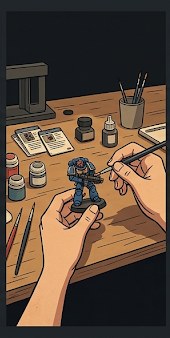
The single biggest barrier for new 40K painters is perfectionism. You see painted armies on Reddit and YouTube that have taken experienced painters months to complete, and you compare them to your first attempt at painting a Space Marine, and the comparison is discouraging. This is the wrong frame. The question is not whether your army looks as good as a professional painter's YouTube showcase. The question is whether it looks better than unpainted grey plastic. The answer is almost certainly yes within your first ten models.
The three-color minimum rule: A model painted with at least three colors — base color, a contrasting detail color, and a wash over the top — is table-ready for most gaming purposes. You can get there in 20 minutes per model for infantry. The advanced techniques (blending, highlights, freehand details) come later, with practice, and make the models look better. They're not prerequisites for playing games or being a member of the community in good standing.
Start with Contrast Paints or equivalent: Games Workshop's Contrast Paints are a line specifically designed for fast, acceptable results for new painters. Applied over a light primer, they do the shading and basecoating in one step. They're not the only way to paint, and experienced painters use them alongside conventional paints, but for a new player's first army they reduce the learning curve significantly.
Priming matters: Always prime your models before painting. Primer — either rattle-can or airbrush-applied — gives the paint something to grip. Models painted directly on bare plastic will chip and flake within weeks of regular handling. Spray primer is available at your FLGS or hardware store (grey, black, or white depending on your color scheme).
Finding the Midwest 40K Community
This is where regional knowledge matters. The Warhammer 40K community in the Midwest is unusually active and supportive of new players, partly because AdeptiCon — one of the largest Warhammer tournaments in the world — runs in Schaumburg, Illinois every March. This gives the Midwest a regional hub for competitive and hobby engagement that keeps the community organized and visible.
Game shops running 40K events: Most major FLGS in Midwest cities run weekly or biweekly Warhammer 40K game nights. These are almost always open to new players. The Guardtower in Columbus, Family Time Games in Indianapolis, and Dice Dojo in Chicago all have active 40K communities. Find your local shop and ask specifically whether they run 40K events — the answer in most Midwest cities is yes.
AdeptiCon (Schaumburg, IL, March 2026): Even if you're not competing, AdeptiCon is worth attending for the hobby experience. The painting competitions, seminars by professional painters, and the sheer density of enthusiastic hobbyists make it one of the best experiences in the hobby beyond casual gaming. New players are welcome and will learn more in a weekend at AdeptiCon than in months of solo reading.
Discord: The Warhammer Community Discord and faction-specific Discord servers (Space Marines, Orks, Necrons, etc.) are active and welcoming of new-player questions. The moderated servers have rules against gatekeeping and elitism, and they're generally followed. Don't be afraid to ask basic questions in the appropriate channels.
What to Buy: The Starter Path
- Warhammer 40K 10th Edition Core Rules (free PDF) — download it before buying anything else. Read the basics.
- One Combat Patrol box for your chosen faction — enough models for small introductory games.
- Starter hobby tools kit — clippers, knife, glue, files.
- Spray primer — matched to your faction's color scheme (light primer for bright colors, dark primer for darker schemes).
- A small paint set — Citadel Colour Contrast Starter Set, or equivalent from Vallejo or Army Painter. Don't buy individual colors yet; you don't know what you'll need.
Total cost for this setup: $150–200. This is your first 60 days of the hobby. After that, you'll know what you need and can buy more strategically.
Warhammer FAQ
Do I need to paint my models to play games?
Technically no — most casual game nights and all organized pick-up games will play against unpainted models. Competitive tournaments often have a painting requirement (typically the three-color minimum). That said, painted models genuinely make the game more enjoyable for both players, and building and painting is half the hobby for most 40K players. Play with unpainted models while you're learning; work toward painting them as you go.
Is 40K too complicated for someone who's never played a miniature wargame?
10th Edition is significantly more accessible than previous editions — the core rules fit in a free PDF and most game mechanics can be learned in a few play sessions. The complexity that intimidates newcomers is primarily the faction-specific special rules, and those come with time. Start with introductory games using simplified rules (the Combat Patrol format is designed for this), play several games before worrying about advanced tactics, and let the complexity accumulate naturally. Most people who found earlier editions overwhelming find 10th Edition manageable.
Can I save money by buying secondhand?
Yes, significantly. eBay, the r/Miniswap subreddit, local Facebook buy/sell groups, and trade tables at game shops and conventions all offer secondhand 40K miniatures at 30–60% off retail. The caveats: secondhand models may be already assembled (examine photos carefully for poor assembly or conversion work), already painted (strip or paint over — stripping is possible with Simple Green), and may not include bases or instructions. For experienced buyers, secondhand is excellent value. For new players, starting with a new Combat Patrol to learn assembly and painting on fresh sprues is often worth the premium.
What's the difference between Warhammer 40K and Warhammer Age of Sigmar?
Both are Games Workshop miniature wargames. Warhammer 40,000 is set in the far future — space marines, alien hordes, interstellar war. Warhammer Age of Sigmar is fantasy — magical realms, gods, and armies of warriors and monsters. The games share some mechanical DNA but are completely separate products with separate miniatures, rules, and communities. They coexist in most game shops and the communities often overlap, but buying 40K models doesn't give you anything for Age of Sigmar and vice versa.
Warhammer 40,000 product details, prices, and rules are subject to change by Games Workshop. Always verify current pricing and rules at your local FLGS or at warhammer-community.com.