Board game nights are the most common form of tabletop gaming social event — easier to organize than an RPG campaign, accessible to people who aren't deep into the hobby, and genuinely fun when done well. They're also easy to do badly in specific ways. The games are rarely the problem; the hosting decisions around game selection, teaching, and pacing determine whether people enjoy themselves and whether they come back.
Game Selection for Mixed Groups
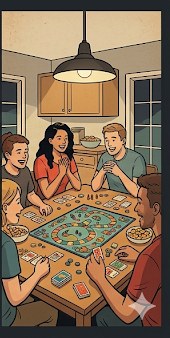
The biggest mistake in board game night game selection: choosing the game you want to play rather than the game that works for your group. If you have three people who play heavy euro games weekly and two who have never played anything more complex than Monopoly, Wingspan is too much game. Ticket to Ride, Codenames, or Sushi Go! are not beneath you — they're correct choices for that group mix.
Principles: shorter games work better for evenings where people will arrive at different times. Games with player elimination don't work well unless the eliminated phase is short. Games that scale well to different player counts are more flexible for uncertain headcounts. Cooperative games reduce the competitive social dynamic that can alienate casual players.
Teaching Rules Effectively
The best way to teach most games is to do a short verbal overview of the goal and the basic turn structure, deal out components, then teach as you play the first round. Reading the rulebook aloud for 20 minutes before anyone touches a card or piece is the worst way to teach a game. Most players learn better from doing than from listening.
Identify the one or two rules that are most likely to come up in the first round and make sure everyone understands those. Everything else can be looked up when it becomes relevant. Correct rules errors gently when they matter for game outcome; let minor errors go if catching them would interrupt the flow of an otherwise enjoyable game.
Timing and Pacing
Plan for everything to take longer than the box says. The box time assumes experienced players who know the rules. Budget 1.5x box time for any game being taught to new players. Build in natural break points — between games, not in the middle of a game — for people to get food, check their phones, and step away without feeling like they're derailing the session.
The Local Game Shop Connection
Your local FLGS can help with game selection, has a demo library or play experience to recommend from, and often has staff who've seen every situation in game selection for mixed groups. The FLGS guide covers what game shops offer beyond retail, and the board game gift guide has specific recommendations for accessible games in various categories.